



The influence of research and development of ultra-high thermal conductivity and ultra-flexible thermal gasket products on the market
Time:
2022-09-22 14:02
Source:
多行文本内容元素
富文本内容绑定数据后可解析HTML语言内容
Ultra-high thermal conductivity and ultra-flexible thermal pads are a series of products with a thermal conductivity greater than 12W/m·K and excellent compliance, as shown in Table 1. This series of products is designed to solve the problem of heat dissipation between the heating device and the heat sink of highly integrated electronic equipment with high heat flux density. The ultra-flexibility of this series of materials can quickly fill irregular rough surfaces, ensure excellent interfacial wettability and interface adaptability, effectively eliminate the thermal resistance generated by the air between the interfaces, reduce the thermal resistance of the interfacial contact, form a good heat transfer bridge, and facilitate the heat export of heating devices.
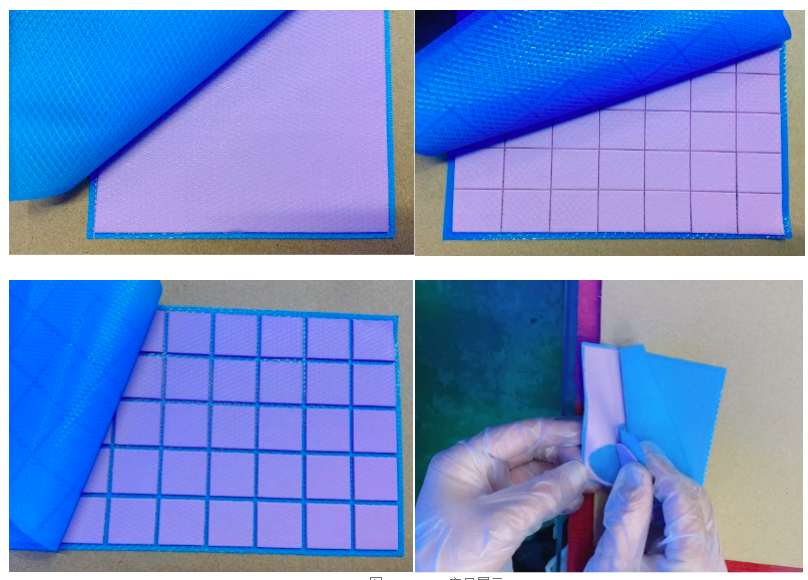
Special instructions
v Before cutting, please tear off the blue release film on one side, when you peel off the blue release film, it is normal for the film to have a mist on the film, which will not affect the performance of the material.
v Any release film must be peeled slowly (less than 150 cm/min) and at a lower peel angle. Peeling too quickly, or at too large a peeling angle, can cause the material to delaminate and stick to the release film.
v In order to minimize the delamination of the material and prevent the material from sticking to the release film, peel off the release film slowly.
Related News
Special rubber material introduction -- Chlorosulfonated polyethylene rubber (CSM)
Chlorosulfonated polyethylene (alias: Hypalon) is a type of special rubber prepared by chlorination and chlorosulfonation of polyethylene. After the chlorination and sulfonation of polyethylene, the regularity of its structure is destroyed, and it becomes a soft and elastic chlorosulfonated polyethylene rubber at room temperature.
Exploration and research report of NR molecular chains
On the one hand, the chemical stability of EPDM is much better than that of NR. This is because in the sulfurization process, there will be many double bonds in the molecular chain of NR that are not used by sulfur cross-linking, which is susceptible to the action of external factors and leads to the breakage of chemical bonds, which is also the main reason for the poor ozone resistance and weather resistance of NR. On the other hand, vulcanization of EPDM is more difficult and slower than that of NR, and the promotion dose required for vulcanization of EPDM is also higher than that of NR.
Ethylene propylene rubber series in the market application
Ethylene propylene diene monomer (EP(D)M; In China, EPR is a copolymer rubber synthesized based on ethylene and propylene, and the molecular chain of copolymer rubber is divided into dibasic ethylene propylene and EPDM rubber according to the composition of monomer units. Ethylene propylene (EPDM) is a copolymer of ethylene and propylene, expressed as EPM; EPDM is a copolymer of ethylene, propylene and a small amount of unconjugated diene third monomer, expressed as EPDM, which is collectively referred to as EPDM (D)M.
Application and development trend of thermal conductivity absorbing materials
These waste heat will increase the temperature of electronic equipment, resulting in reduced stability of equipment performance, and even damage to the entire system, which will seriously cause accidents such as equipment fire, at the same time, if the heat dissipation is not in place, it will greatly reduce the service life of electronic equipment.
Ksas (Dalian) New Materials Products Co., Ltd.
-
Add:6-2, No.1 Liaohe Middle Second Road, Dalian Economic and Technological Development Zone
Email:ll@dlksas.com
Email:sales@dlksas.com
Http:www.dlksas.com

Copyright © 2024 Ksas (Dalian) New Materials Products Co., Ltd.


